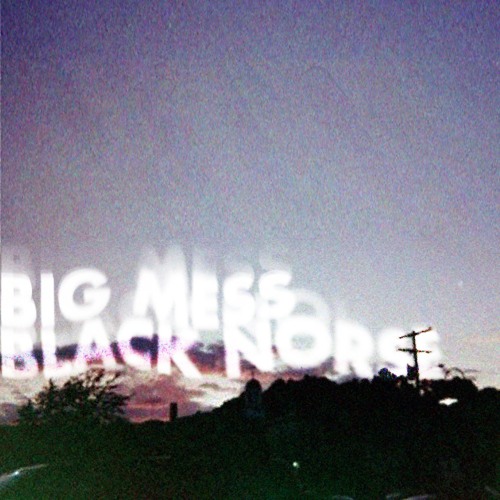
The blues come in myriad forms these days -both in life and tape decks. Existence isn’t sweet without the sour and on the new Black Norse/Big Mess split tape, the noisy post-doom blues and pummeling stoner blues are pretty damn sweet. It’s been years since their last releases, but these 6-tracks mark a return for two bands whose numerous other projects and geographic locations have somewhat capped their output and gigs. Somehow they not only never lose a step, but here we find Big Mess and Black Norse at the top of their respective games.
Big Mess’s contribution is an instrumental war of attrition that veers between jarring post-hardcore, sludgy chords and hints of mathrock that might resemble a cross between Unsane and Unwound. The droning, doom-inspired riffage is notable, but it’s so often betrayed by noisy, dissonant chords and angular notes that render the “doom” or “drone” tags wholly inadequate.
On the opener, “The Cutting Edge of Puppetry,” Olivia Close’s earthquake of a bass line sets the pace while Nick Wiedeman’s jagged guitar notes and chords cut a path upon which we know they’ll eventually join forces. Like pounding railroad spikes, they repeatedly bludgeon a few chords while Nick Egersheim’s relentless floor tom thunders along. The rattling, overdriven bass powers the song behind a wall of low end noise, but Wiedeman’s lines and flourishes are far cleaner and free to roam -it’s a powerful and deceptively melodic recipe. In the ender, “Song for Bella,” they work over a simple, yet potent progression to the point where it’s practically unrecognizable -building in layers of notes that continually collide and amalgamate, evolving into a new twisted heap of noise. While droning can sound like there’s simply no destination and no pace, Big Mess constructs sounds and tears them down in a way that’s far more purposeful and experiential.
Not to be outdone, Black Norse returns with a crushing trio of stoner gems to blow minds and eardrums. The sheer enormity of the recording is immediate and impressive. 7 years in, the duo’s song pacing has slowed a bit and their bluesy riffs thickened -mostly shedding the punk-influenced, noisy metal that dominated their last full length recording. Here, they still channel early Kyuss but with a more polished 70’s influence that recalls a burly version of The Sword. Guitar/vocalist Ben Troy is a songwriting wrecking machine and working with Dean Baltulonis at Wild Arctic studios provided even greater access to the raw power and sonic potential that Black Norse were meant to fulfill.
Troy’s vocals -a ghostly, reverb-laden take on Soundgarden’s Chris Cornell- aren’t just held notes above the riffs, but a lynch pin that provides distinction from others in the stoner metal genre. We could name a dozen influences from grunge to post metal to psych rock that make up Black Norse’s distinguished sound, but by any measure, their 3 dynamic songs are expertly crafted. While it’s possible to get lost in their crushing, bass-driven vibrations, the repetitive parts don’t last long -so this isn’t really that kind of high. Black Norse is the stoner who wants to go do shit, and listening to their side of the tape, that shit might be something like riding a roller coaster standing up. The sheer number of guitar and bass tracks on the recording, combined with spirited songwriting and tempo changes, create an intense, swerving narrative that makes passivity impossible. Their opener “Hell Fire,” lives up to its name by letting loose an onslaught of sensory overloading guitars and towering vocals amidst Ryan Harrison’s frenzied drumming. By contrast, “White” begins an airy meditation in which that roller coaster ride finally smoothes out -momentarily. Only to rocket off the tracks again with an echoed scream into melodic free fall that ends with a breakdown and guitar lead that burns like atmospheric re-entry -ala Acid King’s Lori S. May the ride never end.
Black Norse and Big Mess celebrate the tape’s release w/Green Bastard and INNIS this Saturday May 21st at The Brickhouse in Dover, NH.
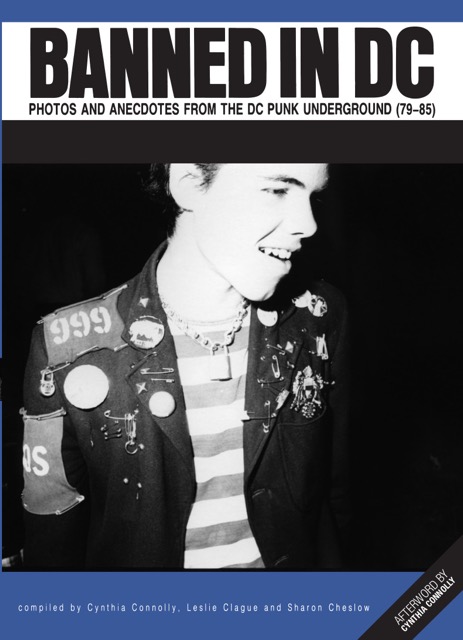
Cynthia Connolly has spent her storied life creating, supporting and curating DIY arts and music. Now in its 7th printing, her self-published book, “Banned in DC” is the quintessential (definitive) documentation of the legendary early 1980’s Washington DC punk scene, but the list of her contributions over the years is a mile long. She’s written for pioneering zines Flipside and Maximum Rock and Roll, booked for the fabled venue, D.C. Space, worked with Dischord Records and created the iconic artwork for Minor Threat’s seminal E.P., “Out of Step.” Throughout it all, her groundbreaking photography has been showcased all over the world, gracing the pages of dozens of publications including the exhibit and book, “Beautiful Losers.” Recently, she’s curated hundreds of diverse exhibitions at museums and art spaces in her current home city of Arlington, VA.
On May 13, Connolly will be at Wrong Brain HQ in Dover, NH to discuss “Banned in DC” and share a slideshow of additional artifacts and anecdotes from her time in the DC punk scene.
Cover photograph of Eddie Janney copyright 1980 Jay Rabinowitz
Why do you think “Banned in DC” still seems to resonate so well with new audiences?
For awhile I didn’t know. Since I was the one who did all the publishing and the mail order and so I sort of became the contact person and then people would write to me once in awhile, you know, email me and say, “You know, I just want to thank you for publishing the book because it sent me in this direction and this is what I’m doing now.” And sending some examples- something like working at a non-profit that’s helping kids, any various different things, but usually something to do with helping a community -which is really awesome that people actually write to me because it really makes my day. Cause it was a struggle all these years to keep it in print and I was so stubborn. Leslie was like, “well, maybe you should get someone else to print it.” I was like “No! I want it to be printed by us so that it looks like you can do this!” (laughs) And you know, you can control your own history, but you can also be the one actually publishing it and distributing it, so you’re a direct conduit -people can actually talk to you directly and it’s not so distant from who made it. So, I think that might have something to do with it, that it was self-published and continues to be self-published and it represents being able to control your own culture and how you control your own life in a way. I think that because it’s about DC as well, it has that double impact. That whole punk scene from Washington DC has a lot of impact and it’s very serious and Dischord still exists and there’s Ian (MacKaye) and there’s all these different bands that still exist and some of the labels still exist so I think that’s part of why the book continues to have a voice.
I don’t know if that’s the only reason, I think the book itself, I don’t know if the way it’s made. When I imagined the book to be created, I always wanted it to be not written by one singular voice because the scene as it was, wasn’t one singular voice it was a whole bunch of people who worked together. We all wanted, well we didn’t know what we wanted, but we wanted some kind of community and we supported each other in it. So the book, it was fully intended as you see it. It didn’t really morph into something else, I mean, I imagined it to have these stories from people, because people were really great story tellers here and then photographs and flyers. And in some kind of chronological order because it just seemed like that’s how you remember things -you know, “What year was that?” “I don’t know, 1983.” (laughs) But the stories were really important cause then it made everybody have a voice and contributed to the book. So maybe that’s one of the reasons why, because it can actually speak for other scenes and places and art movements as well, in some way. It represents not just Washington DC, but maybe it actually represents a music or art movement. I’m just thinking of this because I’ve never really thought about it in depth, I’m surprised that it does keep on going.
How did you go about bringing the book back after it was out of print for so long?
You know, the book went out of print 10 years ago, approximately, and I kept about 300 copies myself so if somebody really wanted one they could track it down. I sold them, but I really minimized, I wasn’t really pushing them to sell them I was just really holding on to them in case somebody really wanted some. So they really ran out about 5 years ago. I probably have a box left, but that’s like super emergency and that’s when I decided that maybe I should redo this again. My friend Eric Denno said he’ll do it, which basically meant he was going to make this book a digital negative so it could actually be printed again because the analog negatives, which were made in the late 80s, were completely deteriorated and you couldn’t print from them anymore -or make plates. So really, the only reason why the book exists is because Eric Denno said he would do it and he didn’t get paid, he just did this on his own because he really wanted the book to exist and he’s super psyched that it exists. So, in a way, that kind of enthusiasm for the book and that people think it’s important that it exists is really awesome and so I feel like I’m this caretaker of this object, that we did all create it, but for some reason, I’m sort of holding the hot potato in this case and I keep on trying to figure out creative ways to sell it or do things with it. So this time, I wrote this afterward and I actually went to Ian (MacKaye) a lot talking to him about what I should do about this book if I’m going to spend all this time trying to get this book together, because it took 5 years to make it again to make it look exactly like the old one, but it’s digital -we literally had to type all the text over again and everything. We talked about it a lot and we were just like, “Why don’t you write something about how and why you made the book?” And like, “Nobody really cares about that.” But then when I started writing it, I realized this is really interesting. I’ve told parts of the story but so much has changed over the past 25 years when the book -I mean, it was 30 years ago when I thought about making the book and so much have changed. People used to buy books, people don’t buy as many books anymore, there’s way less book stores, everything’s online -there wasn’t the world wide web in 1986 so there’s a lot of things that have changed and the way we communicate has changed. So it’s interesting to write about that as well because it does change how we interact as a society. So the book might even represent the fact that it was another time and people lament that it’s gone. I’m not really sure.
How did the discussion and slide show tour come to be?
When I did the afterward, I thought, “Oh, I’ll just do this book signing in L.A.” this is last summer, because I’m going to LA. A friend of mine in Baltimore said, “Well, why don’t you do like a slideshow” “No, nobody’s interested in that.” (laughs) He was like, “What do you mean, don’t you have other images or ephemera that didn’t make it into the book that you could talk about?” I was like, “I guess, I just have some flyers.” So I started going through my stuff and you know, there’s more than I thought and I’m sure if I spent more time, I’d find even more and I do and I add more stuff to the slideshow as time goes on. And so I did my first talk and it was supposed to be in Baltimore, but I was going to New Orleans and I contacted this woman who was really into “Banned in DC” because it actually represented some African Americans in it and she always found that an influence for her because she’s African American. So I asked her if she’d arrange and talk and she was like, “Yeah,” did so I did my first one in New Orleans. She was like, “that’s so inspiring,” and I was like, “it is?” So for me, I always thought of it as just a story, but it seems that the story of why I wanted to do the book and what the whole theme was about is just about DIY. Which is about empowering yourself to do what you want to do and then trust your own intuition about the things you want to do in your life.
That’s a perfect lead -at this stage in your life, what does punk mean to you and what role does it play in your life and art now?
Well, I actually work for the government as a curator so I always have to tap back into that perspective and the energy that I had in the 80s because that is who I am and sometimes it gets lost, especially working in a bureaucracy because it’s so draining. What it is now is the same it always was which is that it’s about taking risk and being comfortable in taking risk. And being positive about that and for me, being involved in communities and supporting people in the things that they’re interesting in doing. So it’s about being creative and working outside the box and supporting those people in their creative endeavors so that they can actually succeed as well. It’s really about trying to make the most of your life, that’s what it means for me. So it’s about being a supportive community that is about creativity and pushing out the walls and not being confined to the rules that we already have -and continually questioning along the way.
How do you personally find compatibility between your ideals and the real situations we find ourselves in as we mature?
I’m having this conundrum right now about should I move back to California or not? Cause I grew up in California and I have this opportunity to move there. And one of the reasons I think about it is because I have this retirement in my job that I could actually take in 3 years and should I stay here and do that? And it’s funny because obviously when you’re 16 you don’t have retirement (laughs) So that’s a good question. How does that apply. That unsuredness in moving somewhere else and getting a job and what’s that mean. Again, I actually do tap into this like me, you know, as who I am I’ve always been able to find something to do. And I need to remind myself of that and that’s sort of part of the punk thing -reminding yourself that we think differently and we have a different perspective. For me, I really see opportunities and I seize opportunities as they come to me. So, a lot of my friends are supportive -again the same thing about supporting your community, being creative and thinking outside the box. When you get older you end up harboring all these things you own, which is something now I’m contemplating because I own a house so I can contain my artwork that I’ve created. But what does all this mean? And when you’re 16, 17, 18, 19, you don’t really have that, so you can be more experimental. So this is where I am right now -What am I doing? Have I just completely bogged myself down with the things I’ve experimented with and created? And then how do I move forward from here? So I’m actually really thinking about that, but I don’t really know how to resolve that at the moment.
One of the things I feel like I need to get more involved with is -ever since I was a kid, cause I grew up in California and lived through the drought in the 70s- was this concern about our food and how we don’t really respect the earth and how much food we waste. We don’t respect how important food is and we Americans waste I think it’s 40% of the food that’s produced which is unbelievably painful to hear that and it’s painful to see your friends waste food. It’s probably one of the things that before I was involved with punk that I really thought a lot about. And that’s something I feel as if I need to go in that direction. Applying that creative thought to food systems and communities and how we can move food to the people who need it. So that’s sort of where I’m thinking I need to go somehow, but I’m not sure how that’s going to happen.
What’s your take on the most recent incarnation of the punk scene in DC? I just saw NPR wrote a piece on DC hardcore. How involved are you with that scene?
It pretty interesting, it’s been going on for awhile. I don’t go to any of those shows. At this point, I don’t really listen to that music, but it’s not really -the music is a vehicle for me to propel some of my own ideas and so, in the early 80s, they all coalesced at the same time. I was looking for, in California, a creative group people or a community I could connect with. At the time, in Southern California near the beach what you really had was a surf scene that was really dude oriented. So that’s not what it was for me, because I wanted to be an actual participator and creator, not just a stand-by kind of person. So music for me, at that time, was a part of the whole community. Now the community, music is still a part of it, but it’s even bigger for me -it’s art and it’s politics and there’s just so many different aspects to it. I’ve heard about this whole scene in DC, which is totally fascinating because we were even talking about earlier -there’s practically no space left, so there’s actually these shows in basements and houses in DC, which is really cool. And I know some people who take photos of them and they tell me about them and they’re like, “You should come!” I’m like, “Yeah, ok,” (laughs) I mean it would be really cool to go, I just haven’t gotten it together to actually connect the dots to go do it… It’s super awesome that people have these shows in basements and again, it’s about controlling -being able to have your own scene. It’s not reliant on anybody else, you’re not asking anybody else to help you and you’re just doing it yourself. I think that’s the best thing ever. There’s nothing more infuriating than when an artist thinks that they need somebody else to help them to make something happen. I think that actually so many artists and musicians can make things happen on their own and they don’t need the help of others. Realizing that completely frees you in a way that you can’t have any other way.
As a pioneering woman in the punk and art scene, what’s your perspective on the extent of growth for women in punk rock and art today?
That’s awesome you said that, but you know, going back to that story about Los Angeles. I went with this guy, the drummer from The Urinals, to go see the LA County Museum of Art exhibit on the Russian avant garde. And that was really inspiring to me because it spoke about a community of men and women as artists creating something that was new and different and I wanted to be a part of that… When I discovered the punk scene in L.A., I realized that so many women were on stage and performing as well as being participants. So that’s why I was involved with it. I was stubborn in that I thought it was important to be involved and that I happened to be a woman. I really like the idea that the Banned in DC book was made by all women. I asked Leslie if she wanted to do the book and it just seemed natural to ask my friends who were interested in it to help make the book. So it turned out to be 4 women, which is kind of unusual. And it continues. Like the woman in New Orleans, she really wanted to do the Banned in DC talk because it really inspired her. Something that’s sort of a passive representation -I feel like what I did was to represented women in this passive way of just being there and my name was there and the names of the people who made the book, who were all women, were there. And that inspired people and women to do the same as well because it represents that empowerment. So, it continues and it’ll only expand because of the way our societal perspective of what women’s roles are has changed, even from the 80’s until now. Because women are more involved in things, that it’ll make it completely different -I would guess it might be less violent (laughs).
Is it different in the art world? I know that’s where you’re most involved now.
Yeah, there’s a ton of women involved with contemporary art and I see them being perceived as equal to men entirely. I see that even more clearly than in art than in other parts of our society. It’s interesting, I just see it as what it is. I don’t actually think about it at all. I don’t think “That’s great, that’s a woman doing that.” I just see people creating artwork and when you really step back and look, it’s a really feels like a very supportive group and they’re probably equal men and women. In D.C., I can’t speak for every city, but in D.C., that’s what I feeling. It’s great.
That sounds positive. I ask because the punk scene, even its revivals, can still be pretty dudey and violent.
Yeah, right right. The music is pretty violent and so you know. Not unless something changes -I wasn’t attracted to the violent part of it at all. That was totally not my thing. So when that started happening in late ‘81 and continued for at least 4 years I was in art school anyway, but I became more disinterested in it because of that part. Because the violence overshadowed the other messages that were part of the whole punk scene. Until mid to late eighties when there was more politics involved with punk music. Positive Force (activist collective) got more and more empowered to do projects having to do with politics and protest and things like that in DC.
There are some really inspiring aspects today -the Transgender movement has really found a voice in punk rock. These marginalized groups are still coming together and creating their space in the scene and it’s so cool.
That’s amazing! That’s really great! Being able to stand and make your voice and really pushing out the limits of where we are and trying to be creative with what we have. So really pushing things to find a new perspective on the way we live. I just think that’s really important, all in all, for a healthy way to live in society. Being aware and accepting of change. To me that’s all about the punk thing -it’s a really big deal really, when you think about it. And so many people don’t think about it, they’re just like, “Oh, I thought punk was just a bunch of violent kids who are fuck ups.” Well, yeah, some of them are, but a lot of it, that’s not what it is. And what’s kind of cool about it is, even though we get older and there’s kids who are into it. It’s funny because our parents probably were sort of terrified of the whole thing. To me now, I’m not terrified of it, I look at kids and like you were saying, “oh, it’s so great that they’re doing this stuff, you know?” So perhaps it’ll take a different form because there’s the older crew is saying “yeah, that’s totally great!” (laughs) I don’t know if that’ll make them more disinterested (laughs)
Oh yeah, right! That they’re not actually rebelling (laughs)
Yeah, maybe that’s not a good form of rebellion because we’re like, “yeah, good good!”
“Here I’ll buy you a guitar and we’ll get a photocopier, we can make zines!” I wonder what’s next then?
If you think about it, in the respects within punk that -I’m just thinking about now, how kids have computers and everything -and you just said it, instruments, you know those were big deal things to have -an instrument, being able to save money and buy a bass guitar and an amp and then being able to have your friends buy instruments and then being able to make a band and then being able to make something of it is the same way that everybody now has -we have a higher bar of ownership of stuff which includes having a computer and a phone which already is this greater investment that we never made when we were kids. The new generation is forced to spend money on crap that they really don’t need… Again, going over the whole punk thing is that empowerment without having all these tools. At this point, everybody thinks that they need some form of social media and all this stuff to succeed, but again, let’s step out of that and say that’s not what you need. That would be punk because it would say that you don’t need a phone, you don’t need all these things, what do you need to actually make this happen? There could be some kids who feel like they’re left out because they don’t have a phone or they can’t afford a guitar -or they have a phone and can’t afford the guitar because they have the phone. The punk thing would be to look at what you’re doing, reassess what you’re doing and make a bold move. Get rid of the phone so you can own a guitar or do something different -just thinking off the top of my head about what the phone means.
I know you’re a big fan of letterpress, the digital age -art, photography, music and promotion seem to have lost their personal, hand-made touch, how do you still maintain that connection in your work today?
I think that I like the contrast of the hard edged manufactured object in comparison also to the letter press in particular, because every printing is unique and it adds that human -when you see something printed in letterpress. When you see something written in letter press, there’s different kinds now -they make these plastic plates are directly from a computer negative so it’s something that’s been laid out on a computer as opposed to something laid out in lead type, which is what I do. The lead type really makes it look human and touched a million times because of the spacing between the letters -kerning errors and leading errors -well not errors but irregularities -to the type itself, some of them are shorter than others so there’s more ink on some and less on others. So it really adds this human element to the work which I really like.
Even the very first photo tour I did of people from DC with their Cars and People Live in Their Bands by Pat Graham photo tour that we did in the 90s’. My photographs were framed and I riveted the photos to board, kind of ruining the photos in some ways by puncturing holes in it, but adding that hand made element to it that makes it seem like somebody was really there and made that happen. I think that’s just part of my aesthetic in some way. I don’t like things totally perfect and now that the digital world makes everything so perfect and clean and slick, I’m more interested in doing silver gelatin prints or prints in the dark room that aren’t perfectly printed. I’ve enjoyed printing things now the you can actually see the sprockets were there, that the developing was a little off so you can see that it actually is film. Otherwise then, some of my prints just look like digital prints, they don’t show the characteristics of film. So I like showing -it adds another layer to the work for somebody to interpret as they look at it. By showing these slight errors or irregularities from one print to the other.
While a huge segment of the population seems content to replace or even give up on artistic expression and progression over time, who or what keeps you motivated and fresh these days?
That’s a good question, I don’t know (laughs) Let’s see, I love taking road trips and visiting my friends outside of the DC area. And riding my bike a lot. I ride my bike a lot and that makes me think, it’s this meditative space to sort through what I’m doing. I like the people I work with in my job and I guess hanging out with my friends. To me, they’re really brilliant people and they inspire me and we inspire each other. That’s what keeps me going.
What are you working on currently? What’s next?
I’m working on this project that’s really taking a long time. I haven’t watched TV in about 20 years and I got a TV and started watching it and I was really kind of dumbfounded about how -this is TV TV with an antenna not cable TV so the ads, these ads were really almost 3 fold worse than the ads I remember from 20 years ago where they say something and then there’s a major disclaimer at the bottom that you can’t read in time for the frame to go away. I started getting obsessed with those disclaimers and I’ve been collecting the text from some of those disclaimers and I want to use them in some project. It’s kind of a bummer, but it’s about how we create this world where we’re trying to create something we can’t ever really get. So I want to do these landscape photographs I’ve taken of big wide open spaces and then letterpress these statements from advertisements over them that are just completely, obscenely, “you’ll never get that.” Basically, the message is “you’ll never get what that is,” the image, “you’ll never be able to obtain that in your life.” Cause the message that’s printed on it has something to do with, you know, “most people won’t qualify for this loan.” There was one that really said, “most people won’t qualify,” and I was like, what’s actually the point of the advertisement? (laughs) It was so weird, it’s just bizarre the things that are out there. It’s the survival of the fittest thing going out there with those ads. If you really don’t pay attention, you’re like, “well, that sounds great!” It’s not great at all. (laughs) I don’t really understand. I’ve been thinking about it more that it has to be not just from TV so the quotes have to come from different places. It started with a menu in Miami and it said, “For groups over 8 a 20% gratuity has been added to your check for your convenience.” So I was like, “Oh, for MY convenience you’ve added the 20% gratuity. I see.” (laughs) So it’s those kind of things where the wording is kind of twisted and pointing that out. It’s all over the place.
Photos:
1st mosiac:
Vivien Greene, Toni Young and Giovanna Righini, 1981
Rites of Spring at Food for Thought, 7-29-1984
Nothing Sacred, 9-1981
2nd mosiac:
Allison Wolfe of Bratmobile/Cold Cold Hearts with her 1979 Pontiac Catalina, 5-16-95
Alec MacKaye of The Warmers with his 1967 Mercury Comet, 4-93
Guy Picciotto of Fugazi with his 1976 Chrysler Cordoba, 8-95
Rick Rude “Mind Cook”
Salty Speakers/Cat Dead Details Later Records
If one had to compare Rick Rude’s new 5-song 7” to a moment in The Goonies, it wouldn’t be just the long overdue discovery of One Eyed Willy’s treasure, but the realization when his ship, the Inferno, breaks free from the grotto and sails out to sea. On “Mind Cook,” the Dover quartet have finally captured their uniquely charismatic live sound on wax -at once manic and dazed, their spacious jams punctuated by powerful bursts and top notch melodies.
“Mind Cook” is an unholy amalgam of Guided By Voices, Built to Spill and Cheap Trick, but that’s just the beginning of the story here. The unhinged riffs and often bent notes jump between reverb-soaked slack rock, mathy flourishes and powerful, driving post-rock that draw from a variety of 90’s influences. At times, the guitar leads, angular structures and higher pitched choruses sound as much like mid-90’s Polvo as Doug Martsch. Just like their live sets, on “Mind Cook,” Rick Rude’s clever ditties are deceptively simple as they grow and blossom with a charming lack of control that suggests the songs are actually taking on a life of their own.
Truthfully, Rick Rude could probably rest on the laurels of Ben Troy and Noah Lefebvre’s captivating guitar work, Ryan Harrison’s feverous drumming and Jordan Holtz’ bass lines, and often they do, but against post-rock norms, their indispensable vocal melodies and sprightly anthems build and animate the songs rather than just narrate them. On the brilliant opener, “Sap,” both vocals and guitar meander fleetingly before colliding with a wall of guitar in which Troy and Lefebvre’s soaring howls coalesce in a triumphant call, “Do all you can to be a tree, grow always for the needs that be!” It’s a worthy follow up to Guided By Voices’ “I am a Tree.”
From their attitudes to the their unflappable interplay on stage, Rick Rude exudes a exaltant mettle that’s almost impossible to duplicate and equally difficult to put on record. For “Mind Cook,” Crawlspace Studio’s Alex Bourne and Joe Brown were up to the challenge. Gone is the super low-fi recording style of the excellently sloppy split-tape with Kiss Concert. Bourne and Brown put the gloss and the punch in all the right places to achieve a dynamic, but by no means heavy-handed production quality.
On “54 TLOC,” bassist Jordan Holtz’s distinctive, wavering alto recalls Sadie Dupuis’ style without imitation. When she impressively belts out the word “repetition” it unleashes a guitar torrent that ends the songs in a flurry of harmonies. “Strombolli” is a bouncy instrumental save for a jovial breakdown anthem that declares, “Short hair, soft cheese, bronze eyes, beef squeeze,” and finishes with a lick that would make Rick Nielsen proud. The mathy, uptempo title track is another album stand-out, merging post punk with their signature solos and changes.
Throughout the fantastic “Mind Cook,” we’re reminded of two things: First, when’s the LP coming? And second, that this record is the undoubtedly the product of a group of friends who, for years, have gotten lost in the blurry fun and feeling of every moment, chord and note. And it’s impossible not to get lost with them.
Rick Rude will celebrate the release of Mind Cook on Thursday March 17th with Ursula, Family Planning and Vanishing DMC at Wrong Brain HQ in the Washington Street Mills, Dover.
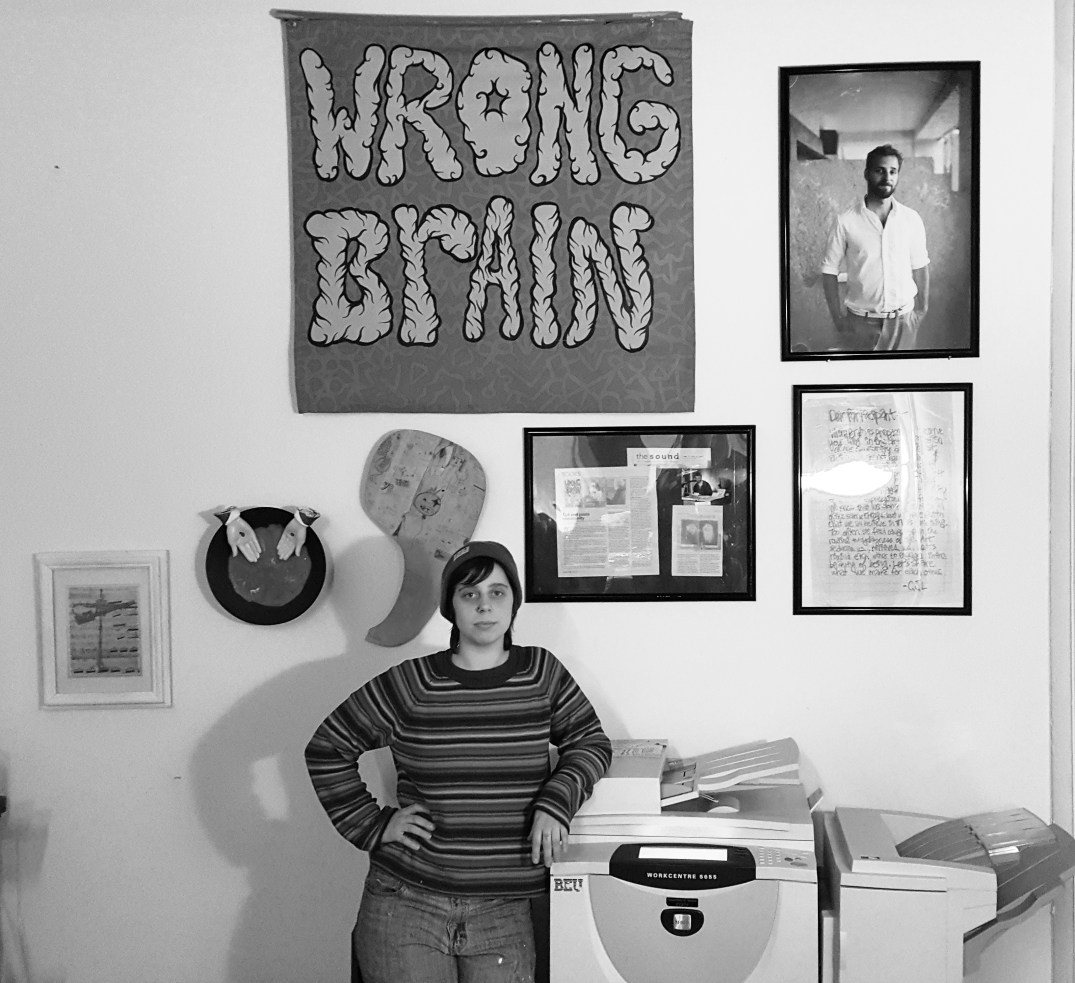
Since 2003, the Wrong Brain arts collective has strived to provide opportunities to all things new and weird in DIY art and music. The organization that began as an afterschool art club now regularly produces their signature zines, quarterly craft fairs, gallery shows and musical events and represents a growing throng of artists, musicians and supporters throughout the seacoast. With an ethical compass set to true north, Wrong Brain is set to open the doors of its new headquarters/gallery/artspace/venue in the Washington Street Mills in downtown Dover, NH. I sat down with founder Sam Paolini to discuss the organization’s roots, ethics in the art world and the endless possibilities of the new Headquarters.
Wrong Brain will celebrate their opening on March 4th with performances by Fucko, Choke Up, Lilith and Kid Coyote AND new artwork from Beth Wittenberg, Scott David Chase, Adam Gouveia and Sam Paolini.
How did Wrong Brain get to this point?
So it was first birthed when I was 15 and in high school. I didn’t have any art classes at the time so I started an after school art club because I felt a lack of alternative art in high school. Even when I took the art classes it was boring -the same old art history. So I just wanted to meet with other people who had different things to show, like we would watch anime or look at Juxtapoz magazine or just do collages. I went to College and discovered zines and fell in love. Dropped out of college, moved back to Exeter, NH and there was just nothing. So I started a zine, just as another outreach kind of thing. I wanted to see what other people were doing and give opportunities to them, but I also wanted to create opportunities for myself at the same time through meeting people and sharing ideas and publishing it. So it was a zine for years. We started the holiday bizarres in 2011 and it was the same thing. I saw a hole where I needed a craft fair where my demographic would come and buy things. Seemed like other people wanted that too so it just worked out. Then we were able to raise money through that and more money, more opportunities and more outreach from the community. We started doing multimedia shows -we’d do a (Wrong Brain) zine release and we’d have poets read and live art and it just gained momentum naturally, I guess. Last year with Cody’s (Poet, Wrong Brain contributor and friend) death, there was an incredible outpouring and outreach from people that he touched and people that just wanted to support Wrong Brain. So all of a sudden we had all these donations so we had to become a legitimate organization to cash checks. So that’s how we got legit, I guess, yeah, cause we have the money.
Is there an ethos that drives Wrong Brain?
It’s always been, for me, kind of a selfish thing because I want something that I don’t see in the community available so I create it because I want to do it and it just so happens that other people want to do it too. So it’s always been creating opportunities where there’s not for alternative or underground art and for emerging artists, musicians and writers too. Where you can’t just do your first set of drawings and have them displayed in a gallery in Portsmouth or really any other commercial way or have them published in a real magazine so we need the little guy -a stepping stone. So I like to think of it like that too.
What are you most proud of with Wrong Brain?
I’m most proud that people, especially with this space and since Cody’s death, I’m most proud that people are willing to help for no personal gain, they just want to give and they want to help -sending checks or showing up with coffee when we’re cleaning HQ and showing up with a pick up truck to lug out all the trash and take it to the landfill just because they appreciate what we’re doing. That makes me proud, that makes feel like I’m doing something right.
What opportunities will the new space bring to Dover?
I’m so excited, I’m giddy about it (laughs) We’re going to have a place for workshops and classes and discussions -a general community area where the artists who have studios here and Wrong Brain and also outside people can come to us with an idea and we will have a place to be able to do it. Whereas last year, finding a venue was the biggest struggle -somewhere that could house so many people, we can make noise, there’s so many things that go into finding the right venue and now we have it. So we can do performances and discussions and we can also do gallery shows, installations, we can have residential artists so that if there’s somebody in the community or Wrong Brain who’s, for example when I was doing the children’s Museum and I didn’t have a space, if I have a big project we can lend our giant walls for a month or two or however long.
What are you working on now personally? Or is everything just going into Wrong Brain right now?
Yeah, I am so broke and I can’t even… first of all, I don’t really have a place to do it. I have a drawing table in my bedroom, but it’s so hard to work when your comfortable bed and TV is right there (laughs) So this is pretty much the only thing that’s in my head right now.
How important is it for you to agree with the ethics of art organizations that you support?
Anywhere you spend your time or money or energy, you’re showing that person or organization that they are worthy. I think with art specifically it’s such a piece of your soul. I mean, you know, if you’re spending money at Walmart you’d kind of say “I’m selling my soul,” but if you’re doing that with art and your putting it in an organization that you don’t agree with then you really are selling your soul to the devil. That kind of thing.
How important is it for Wrong Brain to reach that expectation, ethically?
The whole point of Wrong Brain is that we’re an organization that supports the little people. So if we do something that those people don’t agree with then we’re dead (laughs).
Professional Art is usually some combination of expression and marketing/promotion. Where is your comfort line regarding this conflict?
I’ve been having this discussion with some Wrong Brain members about a logo and I hate the idea of getting a logo because it feels like a big cheesy stamp. And if we take that step what’s the next step after that? The logo means that you’re branding it, I don’t think that Wrong Brain should have the image of a business because we’re a community that supports artists and I want this to be about everybody. Everything is so different that if you put a logo on it you’re creating an image that represents all of them and how can you put one image on every artist or musician? So, even though I know that Wrong Brain has to and we’re a thing and we have to tell people that and they have to recognize it so I’m still in the logo battle.
First of all, there doesn’t have to be marketing in art, you only have to market art if you want to make money off of it. Or even if you just want to continue making art and you just want to get money for supplies. For me, you make it and after that if you want to sell it, you can go into marketing. The problem for me personally, is when I begin to thinking about marketing before I start to make the art. If I have a show booked and I need to make a whole bunch of work, the problem is ok, I’m spending this much money on supplies, what if I don’t sell any paintings? What paintings have I sold in the past? Then you get into that mindset where you’re painting things that you think might sell. That’s a huge personal struggle, I think probably for a lot of artists it is. I think I’ve found ways to avoid that or alter it by doing merchandise type things where I can do sellable items that people can afford, but also have artwork on them that I like to make and that they like to buy. And then big paintings or things like that, I don’t have to think about anybody else, I can just make a big painting because who’s gonna spend a thousand dollars on blood and boobs in neon colors? (laughs) It’s hard to find that customer in this area.
When it comes to Wrong Brain, marketing is important to do marketing for events. There’s no need to do marketing unless we have an event cause we’re already a thing, like, we give our zines away for free, people can pick them up wherever they want, but we do need people to know about shows so that they come and pay 5 bucks so we can pay the bands because they’re artists and they’re baring their souls and lugging their gear. I don’t think there’s any need for Wrong Brain to do too much commercialization, because the point is not to make money, but create opportunities for artists to show their art. Things like the Craft Fairs -the Holiday Bazaar and the Spring Bazaar, those are consumer events, we want to give an opportunity to professional or even hobby artists and crafters, to make money. It’s not like that for everyone, some of the vendors, it’s their first show, they sell things that took them 20 hours for like 5 dollars because they want to see if somebody will buy it. Is that considered commercialism? When it comes to Wrong Brain that line is always moving depending on what we’re doing at the time.
What’s your take on Portsmouth’s new “Tiny Bit Huge” branding/slogan campaign?
I’m mostly confused. I don’t see the connection between the logo and artists. From the video on the campaign or whatever, it just seems like it’s for businesses. They say that they’re gonna have this thing on the website where you use their logo and put your icon in, but as an artist, what would I do with that? Am I going to put it on my website? I imagine it more as like, you print it out and stick on the window of your business. I don’t know, I just don’t get it. I’m trying really hard -I read all those comments and all those posts from everybody, and the article and I get, I know, I really believe they have good intentions, the organization. I don’t think they’re doing anything wrong. I just think it’s misguided. Who’s going to get this money? $10,000 to get a website and pay videographers? The other thing that was weird, was that I was reading the “rewards” or whatever and you can pay $400 and you’ll be the first one featured in the video on the website.
So it’s pay to play?
That’s what confused me too. How is that supporting the arts? I thought the videos were focused on the artists in the community and already you’re kicking it off with “You’ve got to pay to be the first one?” I also don’t really want to piss anyone off, but it’s hard because I’m in two positions -I’m an artist, I’m Sam, and then I’m also the representative of Wrong Brain.
So my first thing was that I was confused. When I think of the Portsmouth arts community, I already think money and I already think commercial galleries and I already think tourism. It’s that and the Button Factory, that’s what I think of. So it didn’t make sense to me why they’d need to create a slogan to attract more of that. I was talking with Adam (Gouveia) about it and we were just trying to figure it out and he’s like, “What if Wrong Brain got 10,000? Can you even imagine what we could do with 10,000?!” Wow, that’s so much money and you’re gonna create a website?
What would you folks do with $10,000?
First of all, we’d definitely buy some equipment that could be made available for free or for really cheap for anybody who wanted to use it. Like a Xerox copier, or a silk screening something or other; a computer or video camera where if you had a video idea we could help you do that. Funding projects for artists and musicians, like painting the skatepark, it would be awesome if we could pay all those artists to paint the park rather just giving them the paint and asking them to do it for free. Other public projects, events, festivals, we could pay so many bands and musicians you know? It’s just endless!
It’s clear that the “arts” are increasingly come from those people with privilege -resources, time, access to markets, etc- Is it dangerous if that’s what it takes nowadays?
It’s about point of view, I guess. If you’re living a comfortable life, you’re making comfortable art and I don’t think that represents culture as a whole. I think that’s a huge problem with Art History in general, you know, the Guerrilla Girls (feminist arts collective that fights sexism and racism) and how we document ourselves in history is through art and culture that has been represented in museums and huge places that are run by pretty much rich white men. Culture is represented by art and the people who make it, so if we don’t have art coming from all kinds of people then we’re not going to grow because you need to see other people’s points of view in order to understand them and ultimately love them. So yeah, it is dangerous ‘cause rich art is boring anyway (laughs)
How does Wrong Brain provide avenues for everyone’s expressions?
First of all, when we publish zines, we do an open call -anybody can submit anything and we fit in as much as we possibly can into the zine. We have a permanent gallery wall and rotating shows at Johnny Boston’s in Newmarket and anybody submit art (it just has to be able to hang on a wall) The craft fairs are relatively cheap to get a table, it’s like $30 and for the amount of people who come that’s a pretty good price. We also do a pop-up gallery at (craft fairs) which anybody can submit art for no fee and we also don’t take a commission on sold artwork. We do all the work for you and if you want to make a donation that’s great but a lot of people are just selling $15 pieces and they spend 15 hours on it.
Once we have this space set up, it’s going to be a community center. So anybody who has an idea or needs a place to work, we’re going to have open studio nights by donation and we are also open to anything you want to pitch us. Please do it, we have the space and the volunteers to make it happen. The more people that are running things through Wrong Brain, the better. The whole point is that anyone can use the name Wrong Brain and use the resources and use us and the money to make their own ideas realized.



 MID DECAY